
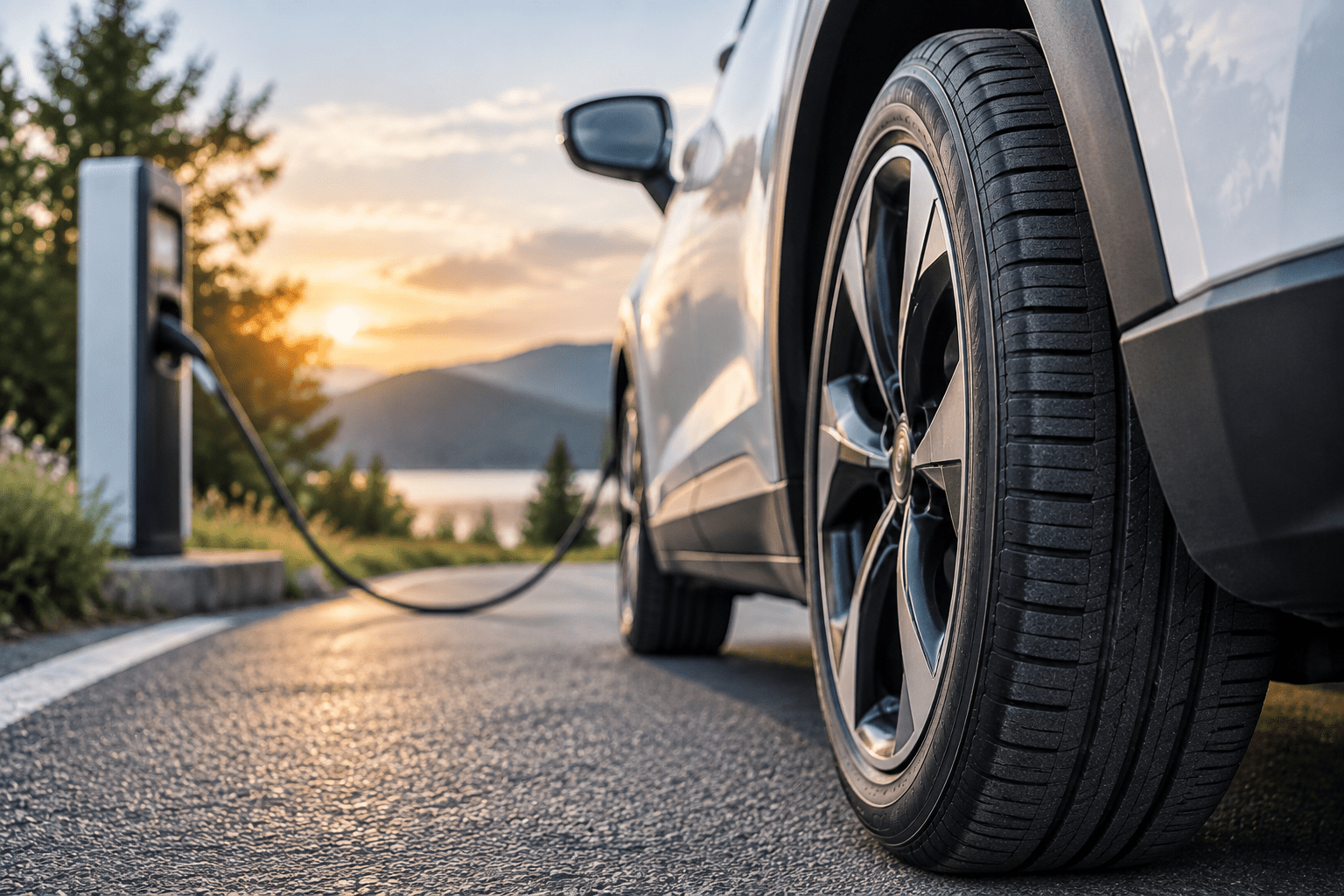
Yes, electric vehicles can wear through tires faster than comparable gasoline cars, but it isn’t simply because they’re electric. EV tire wear is influenced by several factors, including the extra weight of the battery pack, instant electric torque, driving style, tire design, pressure, alignment, and maintenance. A driver who accelerates gently and keeps the tires properly maintained may see very different results from someone who frequently makes hard launches. So, do EV tires wear out faster? They can, but there is no universal rate for every EV. Understanding what causes the extra wear can help you manage it.
Why Do EV Tires Wear Out Faster?
The answer to why do EVs wear tires faster largely comes down to how electric vehicles deliver power and carry weight. Battery packs can make EVs heavier, while instant torque puts more force through the tires when accelerating.
Does EV Weight Affect Tire Wear?
EV batteries add considerable weight, placing greater load on the tires. Over time, that additional load can contribute to faster tread wear, particularly if pressure and alignment aren’t maintained correctly.
Does Instant Torque Wear Out EV Tires?
Electric motors deliver torque immediately. Hard acceleration can therefore put considerable stress on the tread, and repeated aggressive launches can accelerate EV tire wear.
Does Driving Style Affect EV Tire Wear?
It certainly can. Hard acceleration, sudden braking, aggressive cornering, and frequent stop-and-go driving can all increase tire stress. This is why electric vehicle tire wear varies considerably between drivers, even when they own similar vehicles.
Do EVs Wear Tires Faster Than Gas-Powered Cars?
The answer to do electric cars wear out tires faster isn’t a simple yes or no. EVs can experience greater tire wear because they’re often heavier and deliver torque more quickly, but the actual difference depends on the vehicle, tires, road conditions, and driver.
Factor | EVs | Gas Vehicles |
Vehicle Weight | Usually higher due to batteries | Usually, lower |
Torque Delivery | Instant electric torque | More gradual power delivery |
Tire Stress | Can be higher | Depends on vehicle |
Tire Design | EV-specific tires available | Standard tire options |
Maintenance | Important | Important |
A well-maintained EV driven conservatively may have perfectly reasonable tire life. Likewise, an aggressive driver can wear through gasoline-car tires quickly. EV tire wear should therefore be viewed as a combination of vehicle characteristics and everyday use, rather than an unavoidable consequence of owning an electric vehicle.
How Long Do Electric Car Tires Last?
There’s no single mileage figure for EV tires because wear varies with the vehicle, tire compound, driving habits, road conditions, and maintenance. Understanding how long do EV tires last depends on more than tread depth alone. Proper pressure, regular rotation when permitted, correct alignment, and careful driving can all help extend tire life.
What Can Shorten EV Tire Life?
- Frequent hard acceleration can increase tread wear.
- Incorrect tire pressure can cause uneven or accelerated wear.
- Misalignment can wear the inner or outer edges prematurely.
- Worn suspension components can affect tire contact with the road.
- Aggressive driving and hard cornering increase tire stress.
- Delayed tire rotation can create uneven wear where rotation is recommended.
- Rough roads, potholes, and debris can damage tires and shorten their service life.
These factors also influence how long do electric car tires last, so regular inspections are important.
How Can You Make EV Tires Last Longer?
Good EV tire maintenance can help your tires wear more evenly and safely. Simple habits, such as checking pressure and watching for unusual tread wear, can make a meaningful difference.
1. Maintain Proper Tire Pressure
Check tire pressure regularly and follow the vehicle manufacturer’s recommended specifications. Underinflation and overinflation can both create abnormal wear and affect handling and efficiency.
2. Rotate Your Tires Regularly
Follow the rotation schedule recommended for your vehicle and tire setup. Proper EV tire rotation can help distribute wear more evenly, although some EVs with directional, staggered, or different-size tires may have limited rotation options.
3. Check Wheel Alignment
Incorrect alignment can cause rapid inner-edge, outer-edge, or uneven tread wear. A professional EV wheel alignment check can identify alignment issues before they lead to premature tire replacement.
4. Avoid Aggressive Acceleration
Electric motors deliver torque immediately, making strong launches easy. Smoother acceleration reduces unnecessary stress on the tread and supports longer tire life.
5. Monitor Tread Wear
Inspect your tires for uneven wear, low tread, cracks, or other damage. Catching changes early can help you address pressure, alignment, or suspension problems before they become more expensive.
6. Choose the Correct Tires
Use tires that match the EV’s size, load rating, speed rating, and manufacturer requirements. Proper electric vehicle tire maintenance starts with selecting tires designed to handle the vehicle’s weight and performance characteristics.
Why Are My Tesla Tires Wearing Unevenly?
Tesla owners may notice uneven or accelerated Tesla tire wear, but it shouldn’t simply be considered normal EV tire wear. Inner-edge wear, especially on the rear tires, can develop when wheel alignment, suspension geometry, tire pressure, or driving habits affect how the tread contacts the road.
Incorrect alignment can cause one edge of a tire to wear much faster than the rest, while worn or damaged suspension components can create similar patterns. Tire pressure also matters. Driving habits, including frequent hard acceleration, aggressive cornering, and sudden braking, can increase stress on the tires and speed up tread loss. If you’re wondering why Tesla rear tires wear out quickly, these factors are worth checking.
Some Tesla models also have staggered or directional tire setups that limit rotation options, making regular inspections even more important. If you notice one edge wearing faster than the rest, a professional inspection can identify alignment or suspension problems before they accelerate tire replacement.
What Are the Signs Your EV Tires Need Attention?
Recognizing early warning signs can help prevent a minor tire issue from becoming a safety problem. EV tire wear may appear as uneven tread, excessive inner-edge wear, low tread depth, cracks, sidewall damage, or frequent air loss. Vibration, steering that pulls to one side, or changing road noise can also signal tire alignment or suspension problems. Regular electric vehicle tire maintenance makes these issues easier to catch before they lead to premature replacement.
Quick EV Tire Inspection Checklist
- Check EV tire pressure regularly and adjust it to the vehicle manufacturer’s recommended level.
- Inspect tread depth across the tire, not just in one spot.
- Look for uneven or unusually rapid tread wear.
- Examine the sidewalls for cracks, cuts, bulges, or other visible damage.
- Pay attention to steering vibration or a vehicle that pulls to one side.
- Check for recurring air loss that may indicate a puncture, valve issue, or tire damage.
When Should You Replace Your EV Tires?
EV tires should be replaced when tread reaches the applicable safety or legal limit, but tread depth isn’t the only consideration. Severe uneven wear, sidewall damage, bulges, cracks, structural damage, unrepairable punctures, or repeated air loss can make replacement necessary sooner.
Because EV tire wear can sometimes develop unevenly, a tire may need attention even when part of its tread still appears usable. A professional tire inspection can determine whether the problem can be addressed through repair, alignment, rotation, or whether replacement is the safer option.
Where Can You Get EV Tire Service in Plano, TX?
EV and Tesla owners benefit from technicians who understand the tire, wheel, alignment, and suspension requirements of electric vehicles. Patriot Express Tire & Oil can help with EV tire inspections, tire replacement, rotation, balancing, alignment, maintenance, and tire recommendations.
For issues involving handling or uneven wear, professional wheel alignment can help identify problems that may be shortening tire life. The right inspection and maintenance plan can help you get more consistent performance from your electric vehicle tires.
Schedule Your EV Tire Service
If your EV has uneven tread wear, vibration, repeated air loss, or tires approaching the end of their service life, Patriot Express Tire & Oil can inspect the tires and help determine the appropriate next step. Regular service is a practical way to address EV tire maintenance needs before a small issue becomes a larger repair.
Conclusion
So, do EV tires wear out faster? They can, especially when extra vehicle weight, instant torque, aggressive driving, or poor maintenance increases tire stress. However, tire life varies from one EV to another. Maintaining proper pressure, following recommended rotation practices, checking alignment, and choosing the right tires can help reduce premature EV tire wear. Regular inspections also make it easier to catch uneven wear before it becomes a bigger problem. For dependable EV and Tesla tire care in Plano, Patriot Express Tire & Oil can help keep your vehicle ready for the road.
Frequently Asked Questions
Do EVs need tire rotation?
Many EVs benefit from regular tire rotation when the vehicle and tire configuration allow it. Follow the manufacturer’s recommended rotation pattern and schedule because some EVs use staggered or directional tire setups that limit rotation options.
Can I use regular tires on an electric car?
You can sometimes use conventional tires if they meet the vehicle’s required size, load rating, speed rating, and performance specifications. However, tires designed or approved for EV use may be better suited to the vehicle’s weight, torque, efficiency, and noise characteristics.
Why do my EV tires make more road noise?
EVs are generally quieter than gasoline vehicles because there’s no engine noise at the same level. As a result, tire and road noise can be more noticeable inside the cabin, particularly when tread becomes uneven or tires are worn.
Can low tire pressure reduce EV range?
Yes. Low tire pressure increases rolling resistance, which can make the electric motor work harder and reduce driving efficiency. Keeping tires inflated to the manufacturer’s recommended pressure supports handling, tire life, and range.
Why do my EV tires wear more on the inside?
Excessive inner-edge wear can be caused by incorrect wheel alignment, suspension issues, tire pressure problems, or certain vehicle setups. It shouldn’t automatically be considered normal EV tire wear, so a professional inspection is recommended when one edge wears significantly faster.
How often should I have my EV tires inspected?
Check tire pressure regularly and visually inspect the tires for damage or uneven wear. Have them professionally inspected according to your vehicle manufacturer’s maintenance schedule, and sooner if you notice vibration, pulling, rapid wear, air loss, or other changes in handling.