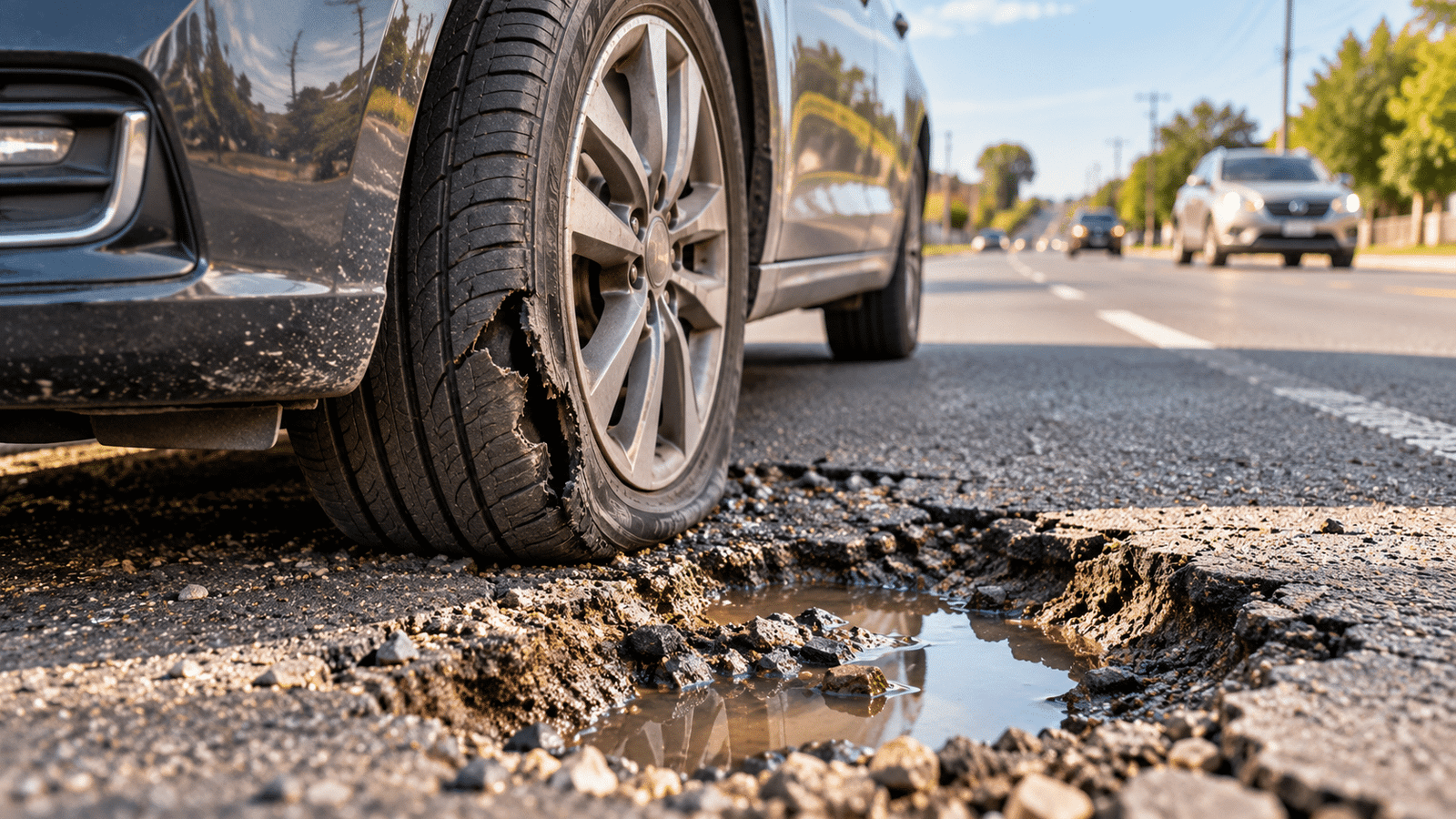
That pothole you hit yesterday may feel like a small bump you already forgot about. Your tire, however, may not be quite as willing to forget. A hard impact can damage the tire internally, bend a wheel, disturb alignment, or stress suspension components without leaving an obvious mark. That is what makes tires damaged by pothole problems particularly deceptive. The tire damage pothole impacts may stay hidden until you notice a slow pressure loss, vibration, uneven wear, or a change in handling. An early inspection can catch these problems before they become costlier repairs. Patriot Express Tire & Oil helps Plano drivers identify pothole-related tire and vehicle damage before a small impact turns into a bigger problem.
Can A Pothole Really Damage Your Tire?
Absolutely. A pothole creates a sudden impact force that can compress the tire sharply against the wheel, particularly when you’re traveling at speed or the tire is underinflated. The sidewall can absorb significant stress, while the internal cords and structure may sustain damage that isn’t immediately visible.
A severe impact can also bend the wheel, disturb alignment, or transfer force into suspension and steering components. This is why pothole tire damage can involve much more than a mark on the rubber. Tire damage from potholes may reveal itself later through pressure loss, vibration, uneven wear, or altered handling.
Quick Tip: A tire does not always show immediate damage after hitting a pothole. Small cracks, pressure loss, or handling changes can appear later.
Signs Your Tire Is Damaged By A Pothole
A pothole impact doesn’t always announce itself with a flat tire. In fact, some of the most important signs of pothole damage can develop slowly after the initial impact. A tire may look perfectly normal from the outside while its internal structure, bead, or sidewall has already been compromised. That is why paying attention to how your vehicle feels in the hours and days after hitting a pothole matters.
Changes such as recurring air loss, steering vibration, pulling, or unusual tread wear can point to tire damage pothole impacts have caused. The sooner these symptoms are identified, the easier it may be to address the underlying issue before it affects other components.
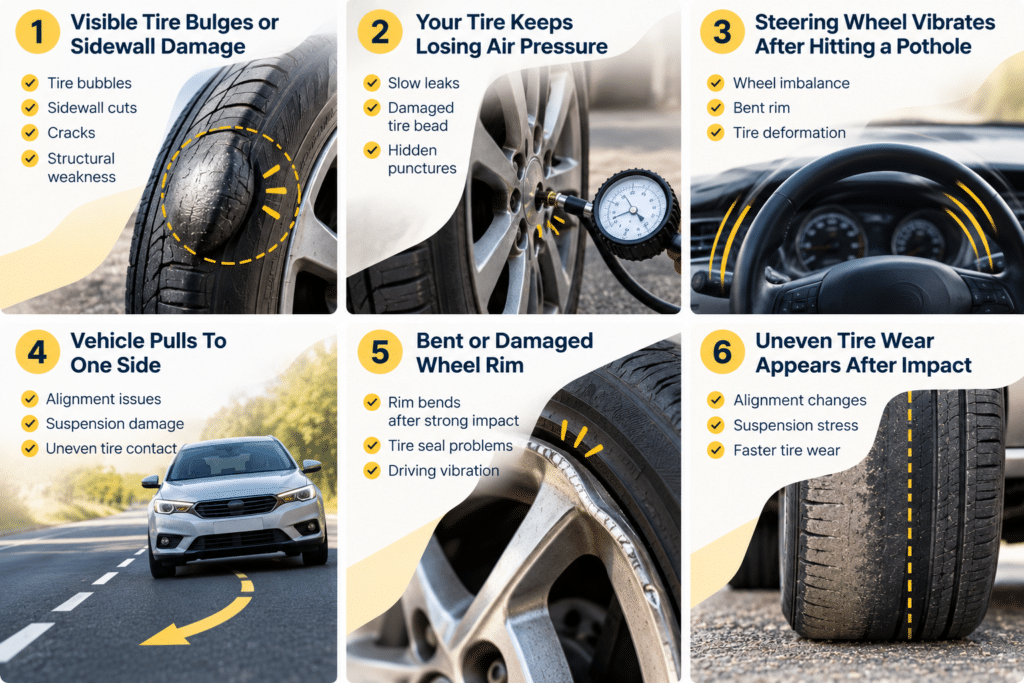
1. Visible Tire Bulges or Sidewall Damage
A bubble or bulge appearing on the sidewall is one of the clearest warnings that the tire has sustained impact damage. A pothole can force the tire against the wheel with enough force to damage the internal cords that support its structure. Once those internal components are weakened, the damaged area may push outward and create a visible bulge.
Look closely for:
- Bulges or bubbles on the sidewall
- Cuts or deep abrasions
- Cracks that weren’t present before the impact
- Unusual deformation in the tire’s shape
This type of tire sidewall damage should not be treated as a cosmetic defect. A compromised sidewall can affect the tire’s structural integrity and may require immediate professional evaluation.
2. Your Tire Keeps Losing Air Pressure
A tire that repeatedly needs inflation after hitting a pothole deserves attention, even if the pressure loss seems minor. The impact may have damaged the tire bead, created a slow leak, or caused internal damage that isn’t visible during a quick inspection.
Watch for:
- Pressure that drops again shortly after inflation
- One tire consistently reading lower than the others
- A tire pressure warning that keeps returning
- Air loss without an obvious puncture
Recurring pressure loss can turn into a flat tire without much warning, so it is better to identify the cause early.
3. Steering Wheel Vibrates After Hitting a Pothole
A new steering-wheel vibration can be an important clue after a hard impact. The pothole may have caused a wheel imbalance, bent the rim, or changed the shape of the tire enough to affect how the wheel rotates.
Pay particular attention if the vibration becomes stronger as your speed increases. Even if the vehicle remains driveable, a persistent vibration should be inspected because the underlying problem may involve the tire, wheel, or related components.
4. Vehicle Pulls To One Side
If your vehicle begins pulling left or right after hitting a pothole, the impact may have affected wheel alignment, suspension components, or the way the tires contact the road.
A vehicle that previously tracked straight but suddenly requires constant steering correction shouldn’t be ignored. Uneven tire contact can also accelerate tread wear. A wheel alignment service can help determine whether the impact has shifted the vehicle’s alignment.
5. Bent or Damaged Wheel Rim
A strong pothole impact can bend the wheel rim, particularly when the impact is sharp or the tire has insufficient pressure. Wheel rim damage may prevent the tire from maintaining a proper seal against the wheel, resulting in recurring air loss.
Other possible signs include:
- Steering or vehicle vibration
- Difficulty maintaining tire pressure
- A visibly distorted section of the rim
- Changes in ride quality
A damaged wheel should be professionally inspected rather than dismissed because the tire itself appears intact.
6. Uneven Tire Wear Appears After Impact
Uneven tire wear can reveal problems that aren’t immediately visible after a pothole strike. If the impact changes wheel alignment or stresses suspension components, the tire may no longer meet the road evenly. One section of the tread can then wear significantly faster than the rest.
Look for:
- One edge wearing faster than the opposite edge
- Patchy or irregular tread wear
- A noticeable difference between tires on the same axle
- Rapid wear that wasn’t present before the impact
The tire damage pothole caused may therefore be connected to a larger alignment or suspension issue. Identifying the underlying problem early can prevent unnecessary tire replacement and help restore proper road contact.
Signs of Pothole Damage at a Glance
Problem | Possible Cause | Warning Signs |
Tire Sidewall Damage | Strong pothole impact | Bulges, cracks |
Tire Pressure Loss | Internal damage | Frequent inflation |
Wheel Damage | Bent rim | Vibration |
Alignment Issue | Suspension impact | Vehicle pulling |
Taken together, these symptoms provide a clearer picture of potential tire damage after an impact. A pothole doesn’t need to leave a flat tire to cause a problem. If your vehicle feels different, the tire keeps losing pressure, or new wear patterns appear, an inspection is safer than waiting for the damage to become impossible to ignore.
What To Do After Hitting A Pothole?
Knowing what to do after hitting a pothole can help you catch damage before it affects safety or leads to a more expensive repair. Even when the vehicle seems to drive normally, take a few moments to assess what happened.
- Inspect the tire safely: Look for bulges, cuts, cracks, or anything that appears different from the other tires.
- Check tire pressure: Compare the affected tire with the manufacturer’s recommended pressure. A pressure drop can point to a leak or impact damage.
- Look for wheel damage: If you can safely see the wheel, check for obvious bends, cracks, or damage around the rim.
- Pay attention to handling: Notice any new vibration, pulling, unusual steering effort, or changes in ride quality.
- Don’t ignore developing symptoms: Pressure loss or handling changes that appear hours or days later can still be related to the impact.
- Schedule an inspection when needed: A professional car and tire inspection after pothole damage can check the tire, wheel, alignment, and related components more thoroughly.
A strong impact doesn’t always produce an immediate flat tire, so an apparently normal drive isn’t proof that nothing happened.
How Pothole Damage Can Affect More Than Your Tires
The tire is often the first part of the vehicle to absorb a pothole’s impact, but it isn’t necessarily the only one affected. A hard strike can transfer force through the wheel and into the suspension and steering system. That’s why tire damage following a pothole can sometimes appear alongside other problems.
- Wheel alignment issues: A sharp impact can alter alignment angles, causing the vehicle to pull or the tires to wear unevenly.
- Suspension problems: Components can be stressed or damaged, changing ride quality and how the tires maintain contact with the road.
- Steering problems: New vibration, pulling, or unusual steering behavior may indicate impact-related damage.
- Reduced driving comfort: A vehicle that suddenly feels rougher or less stable deserves attention.
- Increased tire wear: Alignment or suspension problems can place abnormal pressure on the tread, accelerating wear.
Wheel rim damage can also create vibration or contribute to slow air loss if the wheel no longer maintains a proper seal with the tire. The important point is that a pothole inspection should consider the vehicle as a whole rather than focusing only on visible rubber damage.
When Should You Get Your Tire Checked After Hitting A Pothole?
Not every pothole requires an immediate shop visit, but certain symptoms make professional inspection a smart move. Consider a professional check if you notice:
- Tire pressure dropping repeatedly after the impact
- Steering-wheel vibration, particularly at higher speeds
- The vehicle pulling in one direction
- New or unusual road or suspension noises
- Bulges, cracks, cuts, or other visible tire damage
- Uneven tread wear developing after the impact
A professional tire inspection Plano, TX service can assess the tire and wheel while also checking whether alignment or suspension components were affected. If the tire itself has been damaged, tire repair Plano, TX services can help determine whether the tire is repairable or needs replacement.
Patriot Express Tire & Oil provides tire inspections, alignment checks, and vehicle diagnostics in Plano, TX, helping drivers identify impact-related problems before they become larger repairs.
How Patriot Express Helps Plano Drivers with Pothole Damage?
Pothole damage can involve more than a tire, which is why a proper inspection should look at the tire, wheel, alignment, and related suspension components. Patriot Express Tire & Oil helps Plano and surrounding DFW drivers assess these issues and understand what actually needs attention.
The team can assist with:
- Tire inspections: Check for visible and developing tire damage following a pothole impact.
- Wheel inspection: Identify bends or other wheel rim damage that could contribute to vibration or air loss.
- Alignment checks: Determine whether an impact has changed wheel alignment and contributed to uneven tire wear.
- Suspension evaluation: Look for signs that suspension components have been affected by a hard impact.
- Tire repair recommendations: Determine whether a damaged tire can be safely repaired or should be replaced.
- Honest repair advice: Focus on identifying the underlying problem rather than overlooking symptoms.
For drivers searching for auto repair Plano, TX or a reliable tire shop near me, Patriot Express Tire & Oil provides tire services, alignment, brakes, suspension, diagnostics, and maintenance solutions.
Conclusion
A pothole can feel like a brief inconvenience, but the resulting damage may not be immediately visible. A strong impact can affect the tire, wheel, alignment, suspension, or several components at once. That’s why unusual vibration, pressure loss, pulling, or visible damage shouldn’t be ignored. Early inspection can help prevent a small problem from becoming a costly repair. Patriot Express Tire & Oil helps Plano drivers with tire inspections, repairs, alignment, and complete automotive services.