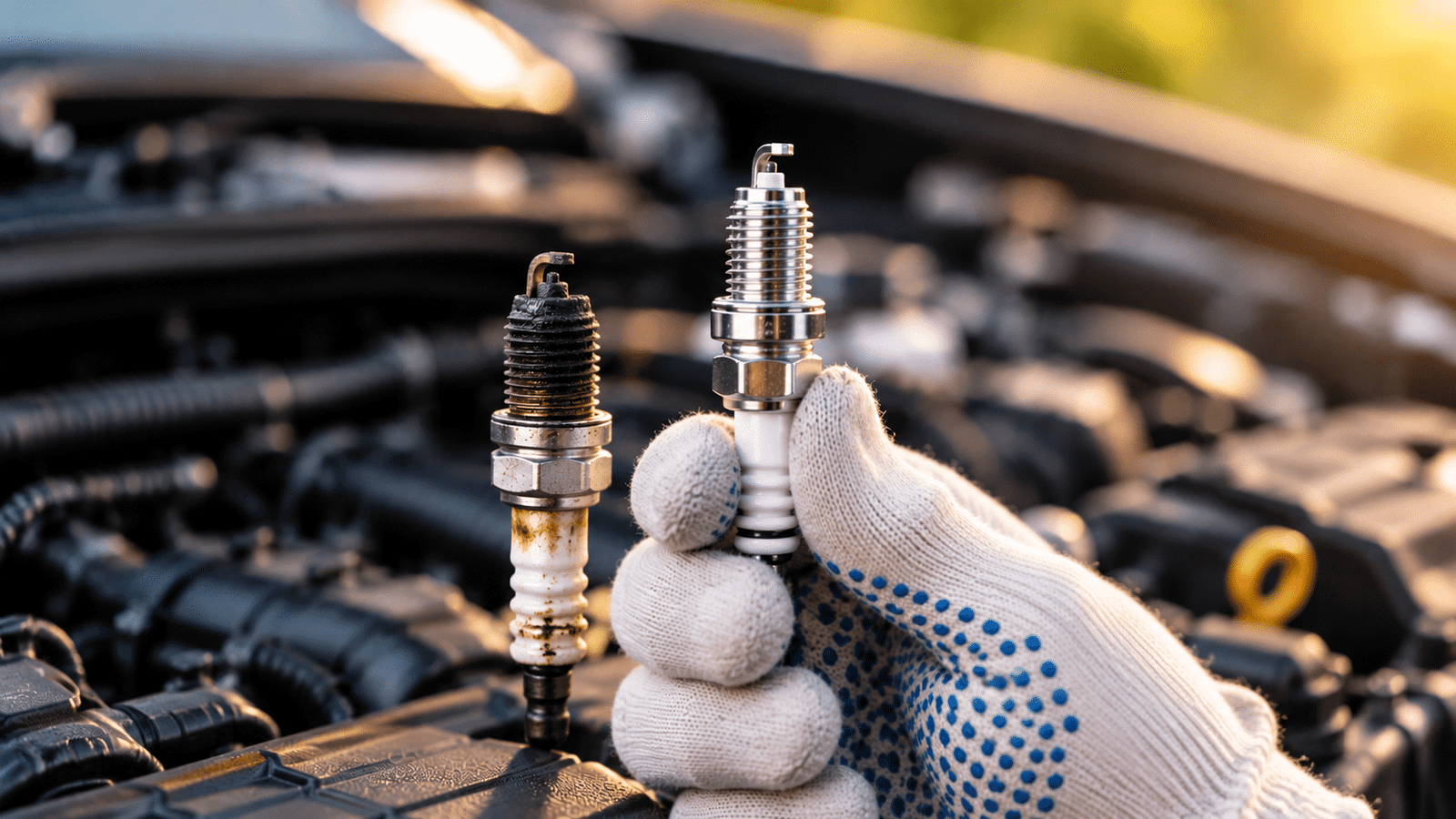
Understanding when to change spark plugs can help you identify potential ignition problems early and determine whether your vehicle needs routine maintenance or an inspectionSpark plugs ignite the air-fuel mixture inside the engine, helping your vehicle start and perform efficiently. Over time, their electrodes wear down, which can affect engine performance and reliability.
So, how long do spark plugs last? The answer depends on your vehicle’s make and model, engine type, and the spark plugs installed. Conventional spark plugs generally need replacement sooner than long-life platinum or iridium plugs.
In this guide, we’ll explain spark plug replacement intervals, the common signs of worn spark plugs, and how following your manufacturer’s maintenance schedule can help prevent costly engine problems.
What Do Spark Plugs Do in a Car?
Spark plugs are essential components of the ignition system in gasoline powered vehicles. They produce an electrical spark inside each engine cylinder, igniting the compressed air and fuel mixture to generate the power needed to move the vehicle.
When spark plugs work correctly, they help the engine start reliably, accelerate smoothly, and maintain consistent performance. However, worn or damaged spark plugs may struggle to ignite the mixture effectively, resulting in engine misfires, rough idling, sluggish acceleration, or difficulty starting.
Because spark plugs operate under high temperatures and pressure, their electrodes gradually wear down. Replacing them according to your vehicle manufacturer’s recommended maintenance schedule helps maintain reliable engine operation.
When Should You Replace Spark Plugs?
The best time to replace spark plugs depends on the type of plugs your vehicle uses and the service interval specified by its manufacturer. Conventional copper spark plugs generally have a shorter lifespan, while platinum and iridium plugs are designed to last longer.
As a general reference, replacement intervals may fall within the following ranges:
Spark Plug Type | Approximate Replacement Interval |
Copper | Around 20,000 to 30,000 miles |
Platinum | Around 60,000 to 100,000 miles |
Iridium | Around 60,000 to 100,000 miles or more |
The correct spark plug replacement interval depends on your vehicle’s engine specifications and the type of spark plugs installed. If you drive a petrol car, the petrol car spark plug change interval can vary considerably depending on the make, model, and plug material. Always refer to your owner’s manual to understand when spark plugs should be changed and avoid relying on a general mileage estimate alone.
You may also need an earlier inspection if your engine begins misfiring, idles roughly, accelerates poorly, or becomes difficult to start. These symptoms can indicate worn spark plugs, although other ignition, fuel, or engine repair problems may cause similar issues.
Regular maintenance and timely replacement help keep your engine operating as intended and reduce the risk of continued performance problems.
Some newer vehicles have been designed with advanced ignition systems that are supposed to eliminate the need to replace spark plugs, but if you are noticing any of the symptoms below, bad spark plugs could be the cause.
7 Signs Your Spark Plugs Need Replacing
If you’re wondering, “do your spark plugs need replacement? Here’s how to tell,” look for changes in starting, acceleration, fuel economy, engine smoothness, and warning lights. These are some of the common signs you need new spark plugs, although other vehicle problems can cause similar symptoms.
1. Difficulty Starting Your Car
If your engine takes longer than usual to start or struggles to turn over, worn spark plugs may be one possible cause. Damaged electrodes can produce an inconsistent spark, making combustion less reliable. However, a weak battery or another ignition system issue can cause similar symptoms.
2. Slow or Sluggish Acceleration
Spark plugs that no longer produce a reliable spark can affect engine power and acceleration. You may notice hesitation when pressing the accelerator or difficulty reaching your usual speed. Fuel delivery problems and sensor faults can also cause reduced acceleration.
3. Poor Fuel Economy
Worn or fouled spark plugs can interfere with efficient combustion, potentially increasing fuel consumption. If you notice that you are filling up more often despite similar driving habits, have your ignition system checked along with other possible causes of reduced fuel economy.
4. Engine Misfires
An engine misfire occurs when combustion does not happen correctly in one or more cylinders. You might notice stumbling, jerking, or a temporary loss of power while driving. Worn spark plugs can cause misfires, but faulty ignition coils, fuel system issues, and other engine problems may also be responsible.
5. Rough Idling or Engine Vibrations
If your vehicle shakes, vibrates excessively, or sounds uneven while idling, worn spark plugs may be contributing to the problem. An inconsistent spark can interrupt smooth combustion and make the engine run less evenly.
6. Engine Hesitation During Acceleration
An engine that hesitates, stumbles, or responds inconsistently when you accelerate may have worn spark plugs or another ignition problem. Have the vehicle inspected if the hesitation continues or becomes more noticeable.
7. Check Engine Light
A check engine light can illuminate when the vehicle detects an engine misfire or another fault affecting engine operation. Although spark plugs can be responsible, the warning light alone does not confirm that they need replacement.
If the check engine light flashes, reduce engine load and pull over safely when possible. A flashing light can indicate an active misfire that may damage the catalytic converter. Arrange prompt professional diagnosis rather than continuing to drive normally.
If you experience one or more of these symptoms, have your vehicle inspected to determine whether spark plug replacement is necessary or another repair is required.
How Long Do Spark Plugs Last?
Spark plug lifespan varies according to the electrode material, engine design, driving conditions, and manufacturer’s maintenance recommendations. Conventional copper plugs generally wear out sooner than platinum or iridium plugs, which are designed for longer service intervals.
For many vehicles, spark plugs may last anywhere from approximately 20,000 miles to 100,000 miles or more, depending on the specific plug and engine application. However, this range should not replace the maintenance schedule provided for your vehicle.
Frequent short trips, severe operating conditions, engine problems, and oil or carbon deposits can contribute to premature spark plug wear or fouling. Regular inspections can help identify issues before they affect engine performance.
To determine your spark plug lifespan, check your owner’s manual for the recommended replacement mileage and inspect the plugs if you notice starting difficulties, rough idling, or engine misfires.
Types of Spark Plugs and How to Choose the Right One
Choosing the right spark plugs depends on your vehicle’s engine design and manufacturer specifications. Different spark plug materials offer different levels of durability, performance characteristics, and replacement intervals.
Copper Spark Plugs
Copper spark plugs use a copper core and typically have a nickel alloy electrode. They are generally more affordable but tend to have shorter service lives than platinum and iridium alternatives. They remain suitable for certain engines designed specifically for this plug type.
Platinum Spark Plugs
Platinum spark plugs use platinum at the electrode to improve durability compared with conventional plug designs. Depending on the application, they can provide longer replacement intervals and consistent ignition performance.
Iridium Spark Plugs
Iridium spark plugs use a durable electrode material that allows for a fine electrode design and long service life in compatible engines. They are often used in modern vehicles, but the correct specification should always be confirmed before purchasing replacements.
Which Spark Plugs Are Best for Your Car?
The best spark plugs are those that match your engine’s design and manufacturer recommendations. Check your owner’s manual for the correct plug type, part number, heat range, and gap specifications where applicable.
Brands such as NGK, Denso, Champion, and Autolite offer different spark plug options, but availability and compatibility vary by vehicle. Selecting the correct plug is more important than choosing a brand based on price or material alone.
What Causes Spark Plugs to Go Bad?
Spark plugs are designed to withstand repeated electrical discharges and high temperatures, but they gradually wear out during normal engine operation. Several factors can cause them to deteriorate sooner than expected.
- Electrode wear: Repeated sparking gradually wears down the electrodes, affecting the plug’s ability to produce a consistent spark.
- Carbon buildup: Deposits can accumulate on the plug and interfere with ignition, sometimes due to driving conditions or engine operating problems.
- Oil contamination: Oil on the firing end may indicate an engine oil leak or another mechanical issue that requires attention.
- Engine overheating: Excessive heat can damage the plug or its ceramic insulator.
- Incorrect spark plugs: An incompatible plug or incorrect specification can affect performance and durability.
- Ignition or fuel system problems: Faults elsewhere in the engine may cause fouling, misfires, or premature plug failure.
If your spark plugs repeatedly become fouled or wear out prematurely, replacing them alone may not resolve the underlying issue. A professional inspection can help identify the root cause.
How Much Does Spark Plug Replacement Cost?
The cost of spark plug replacement depends on the vehicle’s make and model, the number and type of plugs required, and the labor involved. Some engines allow relatively straightforward access to the plugs, while others require additional labor to reach them.
Copper plugs are generally less expensive than platinum or iridium options, but the correct plug for your engine should always take priority over the initial purchase price. Labor costs can also vary significantly depending on engine design and local service rates.
When estimating spark plug replacement costs, consider the following factors:
- The number of spark plugs your engine requires.
- The type and specifications of the replacement plugs.
- Labor time and accessibility.
- Whether ignition coils, plug wires, or other related components require inspection or repair.
For an accurate estimate, have a qualified technician assess your vehicle and confirm which parts and services are necessary.
Conclusion
Knowing when to change spark plugs helps you maintain engine performance, reliable starting, and efficient fuel consumption. Although spark plug lifespan varies by material and vehicle, following the manufacturer’s recommended replacement interval is the best way to keep your ignition system in good condition.
Watch for warning signs such as rough idling, slow acceleration, engine misfires, poor fuel economy, and difficulty starting. These symptoms can indicate worn spark plugs, although a professional diagnosis may be needed to identify the exact cause.
If your vehicle is showing signs of ignition trouble, contact Patriot Express Tire & Oil to ask about an inspection and the next steps for your vehicle. Timely maintenance can help address performance issues and keep your car ready for the road.