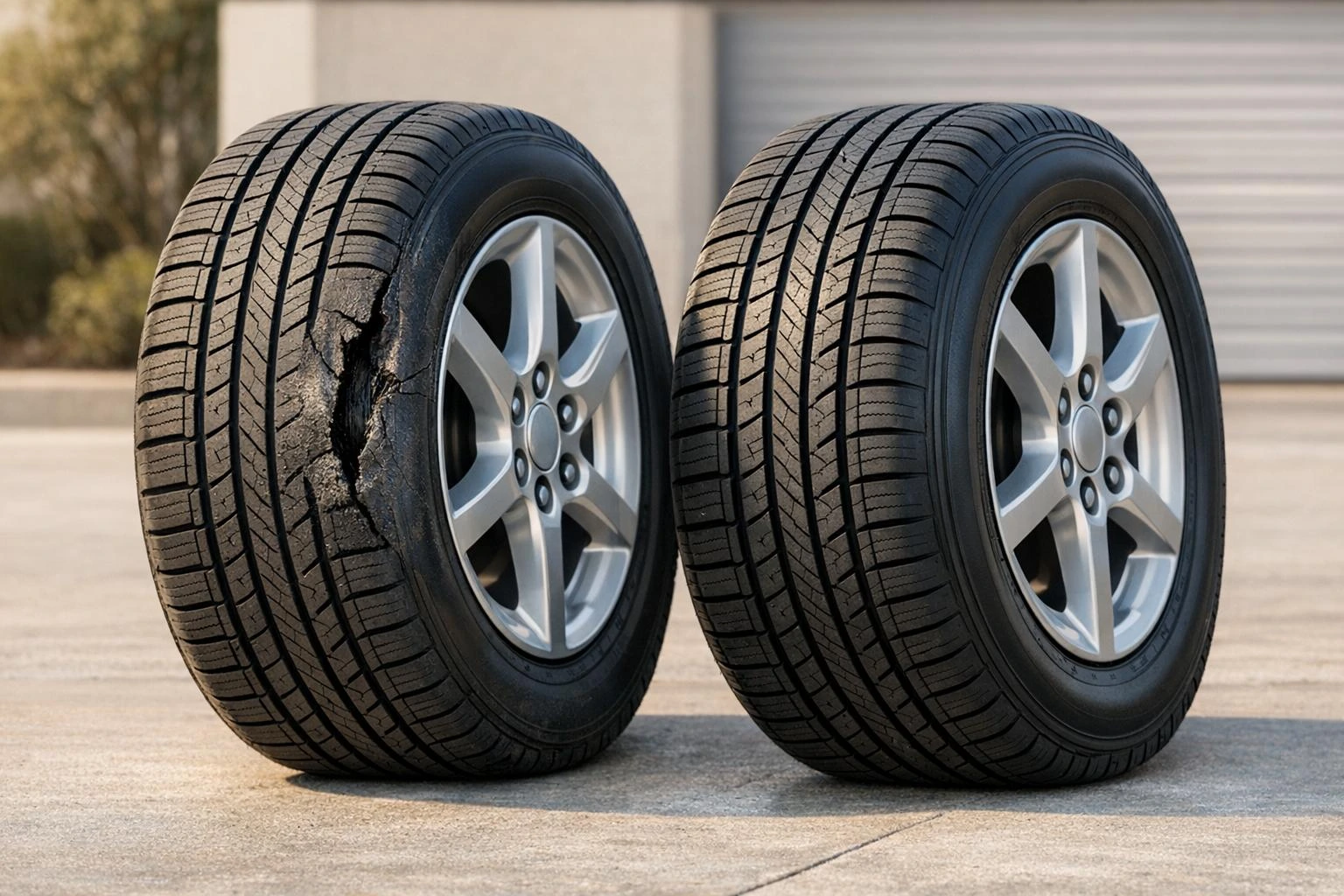
Your car’s tires are the foundation of safe driving, the only part of your vehicle that connects with the road. From ensuring traction on wet streets to maintaining fuel efficiency and braking performance, their condition plays a critical role in every journey. But when one gets damaged, you’re faced with a common and important question, tire repair vs. replacement, which is the right choice?
Many drivers assume a quick patch can solve any flat, while others rush to buy new tires at the first sign of damage. The truth lies somewhere in between. Choosing the wrong option can affect safety, fuel economy, and the overall lifespan of your tires.
In this guide, we’ll help you understand the difference between tire repair and replacement, when each is appropriate, what factors to consider, and how a professional tire repair technician can guide you toward the safest and most cost-effective solution for your car.
Key Features of Tire Repair vs. Replacement
Tire Repair
Tire repair is the process of restoring a damaged tire so that it can function safely again, typically by sealing small punctures or leaks within the tread area. It’s usually performed when the damage is limited and doesn’t compromise the tire’s internal structure.
Temporary Solution
A repair is often a short-term solution. While it’s an effective way to fix a nail puncture or small hole (less than 1/4 inch), it doesn’t address more serious or structural damage. Over time, a repaired tire may weaken, especially if exposed to heat or uneven pressure.
Advantages
Tire repair is cost-effective and quick, making it a practical choice for small, straightforward punctures. It allows drivers to get back on the road within minutes and can extend a tire’s usability if done properly.
Limitations
While convenient, tire repairs aren’t meant for every situation. Damage to the sidewall, irregular wear, or multiple punctures usually mean the tire can’t be safely repaired. According to the Tire Industry Association, any repair outside the tread area or involving internal damage can compromise safety and should lead to replacement instead.
For lasting peace of mind, always consult a certified tire repair technician who can inspect the damage and determine whether repair is truly a safe option.
Tire Replacement
Tire replacement involves removing the damaged or worn-out tire entirely and installing a new one. This ensures maximum safety, performance, and efficiency for your vehicle.
Long-Term Solution
Replacing your tires guarantees the highest level of protection on the road. New tires offer improved traction, stability, and braking response, especially during harsh weather conditions or long commutes.
Advantages
A fresh set of tires not only enhances handling but also contributes to better fuel economy, smoother rides, and reduced noise. Modern tire technology includes improved tread patterns and rubber compounds that enhance grip and durability.
Limitations
The main drawback is the upfront cost. However, the long-term value far outweighs the expense; new tires last longer, improve overall vehicle performance, and significantly reduce the risk of accidents caused by blowouts or tread failure.
Ultimately, if your tires show visible damage, uneven tread wear, or aging (over six years old), replacement is the safest and most responsible choice.
How to Choose Between Tire Repair and Replacement?
Knowing when to repair and when to replace can save you both money and potential safety hazards. Here are the key factors that help determine the best option:
1. Location of the Damage
If the puncture is located in the tread area and measures less than 1/4 inch in diameter, it’s often repairable. However, damage to the sidewall or shoulder cannot be safely fixed; these areas flex as you drive, and repairing them increases the risk of sudden failure.
2. Size and Depth of the Damage
Small holes can be patched; larger ones can’t. If the puncture exceeds the allowable size or penetrates the inner steel belt, replacement is the only safe route.
3. Number of Repairs
A tire that has already been repaired multiple times should be replaced. Each repair weakens the tire’s structural integrity, reducing its ability to handle road stress safely.
4. Tire Age and Condition
Even without visible damage, older tires degrade over time. Cracks, dry rot, and worn treads reduce grip and increase the risk of blowouts. According to the National Highway Traffic Safety Administration, replacement is recommended if your tires are older than six years, regardless of remaining tread depth.
5. Performance and Mileage Goals
If your tires are nearing the end of their tread life (2/32 of an inch or less), replacement offers better long-term performance. Investing in a new set also ensures consistent traction and fuel efficiency.
When Tire Repair is Acceptable:
- Puncture is within the tread area
- Damage is small (less than 1/4 inch in diameter)
- The tire has sufficient tread depth and is structurally sound
- Professional inspection confirms it’s safe to repair
When Tire Replacement is Necessary:
- Damage extends to the sidewall or shoulder
- The tire shows signs of dry rot, bulging, or uneven wear
- The puncture is too large or improperly repaired in the past
- Tire age exceeds the manufacturer’s recommendation
When in doubt, schedule a professional inspection. At Patriot Express Tire & Oil, our skilled technicians provide honest assessments and ensure your tires meet all safety standards before you hit the road again.
Conclusion
Your tires are more than just rubber; they’re what keep you connected to the road and protected during every drive. Understanding the difference between tire repair vs. replacement can help you make smarter, safer, and more cost-effective decisions.
Repairs are suitable for small, surface-level damages, but they’re not a cure-all. In many cases, replacing your tires ensures long-term safety, reliability, and performance.
The best way to know for sure? Consult a professional. In this regard, Patriot Express Auto’s tire repair and replacement services are performed by experienced technicians who will evaluate your tire’s condition and recommend the safest option for your vehicle.
Schedule a tire inspection with Patriot Express Tire & Oil today to receive expert guidance and ensure your car is ready for every mile ahead.
Frequently Asked Questions
1. Is it better to repair a tire or replace a tire?
It depends on the extent and location of the damage. Small punctures in the tread can usually be repaired safely. However, if the damage affects the sidewall, is too large, or the tire shows signs of aging, replacement is the best and safest option.
2. What is the 3% tire rule?
The 3% tire rule refers to keeping replacement tires within 3% of the original tire’s overall diameter. Exceeding this (up or down) can affect your vehicle’s handling, fuel economy, mechanical stress and speedometer accuracy. Therefore, always check manufacturer recommendations before choosing new tires.
3. What is the rule of thumb for tire repair?
The general rule is that only punctures smaller than 1/4 inch in the tread area can be repaired safely. Damage to the shoulder or sidewall should never be patched. A qualified tire repair technician should always inspect the tire to confirm if it’s safe to fix.
4. Which is better, repair or replace?
Neither option is universally better; it depends on your tire’s condition. Tire repair is ideal for small, contained damage, offering a cost-effective solution. Tire replacement, however, guarantees long-term performance, safety, and durability. When in doubt, professional assessment is always the smartest approach.