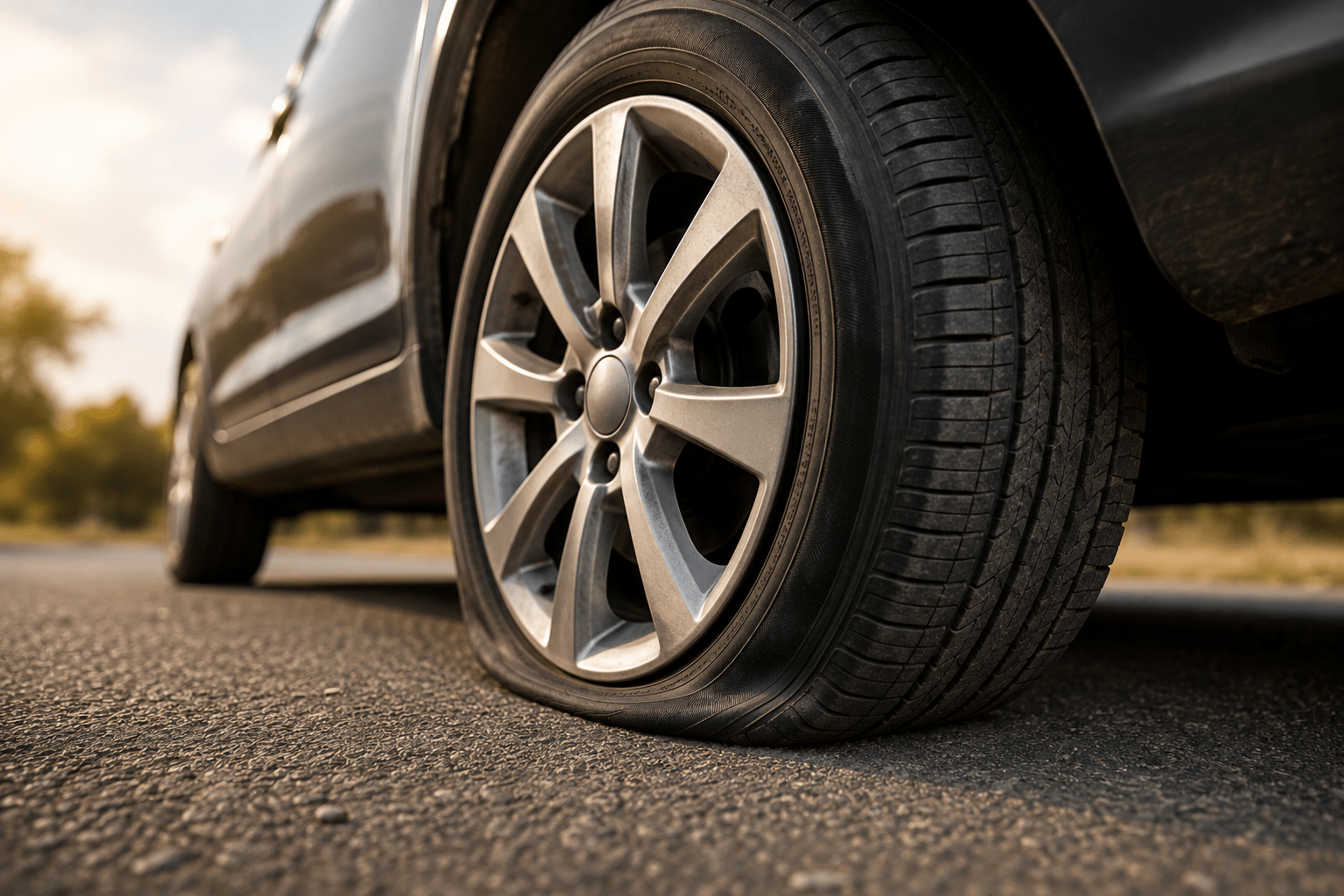
Low tire pressure is one of the most common tire problems drivers experience, yet it’s also one of the easiest to overlook. Even a small drop in air pressure can affect your vehicle’s handling, fuel efficiency, braking performance, and tire lifespan. Usually, drivers first notice the issue when the low tire pressure light appears on the dashboard, but by then, the tires may already be underinflated. Understanding what’s considered low tire pressure, what does low tire pressure do to your vehicle, and whether it’s safe to drive on low tire pressure can help you avoid unnecessary tire damage and costly repairs. In this guide, you’ll learn the most common causes, warning signs, safe solutions, and when it’s time to seek professional tire service.
What’s Considered Low Tire Pressure?
Every vehicle is designed to operate with a specific tire pressure, measured in pounds per square inch (PSI). What’s considered low tire pressure depends on your vehicle’s manufacturer-recommended PSI rather than the maximum pressure printed on the tire’s sidewall. Driving with tires below the recommended pressure can reduce stability, increase tire wear, and compromise overall safety.
You can usually find the correct tire pressure:
- On the sticker inside the driver’s side door jamb.
- In your vehicle owner’s manual.
- Occasionally inside the fuel door on certain vehicles.
It’s important to understand the difference between these numbers:
- Recommended PSI: The ideal pressure for safe handling, braking, and even tire wear.
- Maximum PSI: The highest pressure the tire itself can safely hold, not the pressure you should inflate it to during normal driving.
Tire pressure should always be checked when the tires are cold, meaning the vehicle has been parked for at least three hours or driven only a short distance. As tires warm up, the air inside expands, producing a higher reading that may not accurately reflect the true pressure.
Seasonal weather also plays a significant role. Cold temperatures naturally reduce tire pressure, often by about one PSI for every 10°F drop in temperature. While that may seem minor, even a small decrease can affect vehicle handling, fuel economy, and tire longevity. Regular pressure checks, especially during seasonal changes, help keep your tires performing as intended.
What Causes Low Tire Pressure?
Although tires naturally lose a small amount of air over time, recurring low tire pressure usually indicates an underlying issue that should not be ignored. Identifying the cause early can help prevent uneven tire wear, poor handling, and unexpected roadside breakdowns.
Common causes include:
- Normal air loss: Even a properly functioning tire gradually loses air over time, making routine pressure checks essential.
- Cold weather: Lower temperatures cause the air inside your tires to contract, often triggering the low tire pressure light during colder months.
- Tire punctures: Nails, screws, glass, or other sharp road debris can create slow leaks that become worse over time.
- Damaged valve stems: Cracked or worn valve stems may allow air to escape even when the tire itself is undamaged.
- Bent or damaged wheels: Hitting potholes or curbs can damage the wheel rim, preventing the tire from sealing properly.
- Tire aging and wear: As tires age, the rubber becomes less flexible, increasing the likelihood of small leaks and pressure loss.
Some causes, such as seasonal temperature changes, are temporary and can often be resolved by inflating the tires to the recommended PSI. Others require immediate attention to prevent further damage.
Signs that the problem may require professional service include:
- Tire pressure drops repeatedly after being inflated.
- Visible punctures or embedded objects.
- Air leaking around the valve stem or wheel rim.
- Uneven tread wear develops over time.
- Persistent TPMS warnings despite proper inflation.
If your tire continues to lose pressure, scheduling professional tire repair services is the safest way to identify and fix the source of the leak. If recurring pressure loss is accompanied by uneven tread wear or your vehicle pulls to one side, a wheel alignment in Plano, TX may also be recommended to prevent premature tire wear and restore proper handling.
Common Warning Signs of Low Tire Pressure
A low tire pressure light is often the first indication that something is wrong, but it’s far from the only warning sign. Underinflated tires can affect the way your vehicle drives long before the dashboard light appears. Recognizing these symptoms early can help you avoid costly tire damage, improve road safety, and prevent unexpected breakdowns.
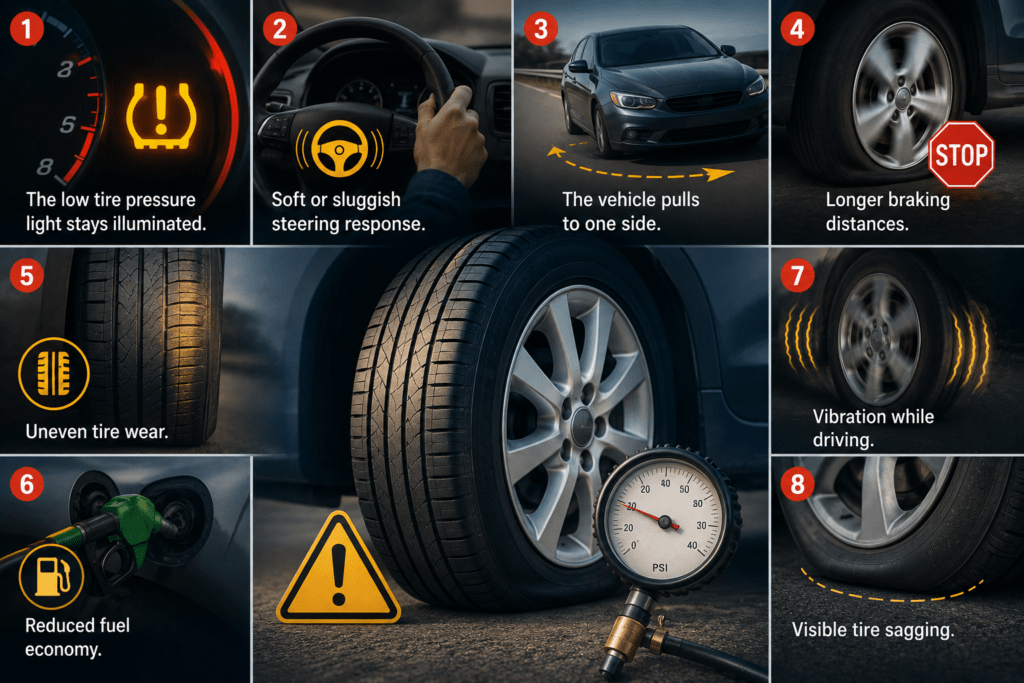
Common warning signs include:
- The low tire pressure light stays illuminated. This usually indicates that one or more tires have dropped below the recommended PSI.
- Soft or sluggish steering response. Low pressure increases tire flex, making the steering feel less precise.
- The vehicle pulls to one side. An underinflated tire can cause uneven handling and reduce stability.
- Longer braking distances. Reduced tire pressure decreases the tire’s ability to grip the road effectively.
- Uneven tire wear. Underinflated tires wear more quickly along the outer edges of the tread.
- Reduced fuel economy. Low pressure increases rolling resistance, forcing the engine to work harder.
- Vibration while driving. Tires that aren’t properly inflated may create noticeable vibrations, particularly at higher speeds.
- Visible tire sagging. If a tire appears flatter than usual, it should be inspected immediately.
Some warning signs require immediate attention. If your vehicle becomes difficult to control, the tire appears visibly deflated, or you notice rapid air loss, stop driving as soon as it is safe to do so. Continuing to drive can damage both the tire and the wheel. If braking performance also seems affected, scheduling a professional brake repair and a thorough tire inspection can help identify any related issues before they become more serious.
What Does Low Tire Pressure Do to Your Vehicle?
Many drivers underestimate what does low tire pressure do to a vehicle, assuming it’s only a minor inconvenience. In reality, underinflated tires affect nearly every aspect of your vehicle’s performance, from handling and braking to fuel efficiency and tire lifespan.
Driving with low tire pressure can lead to:
- Reduced traction. Less air pressure changes the tire’s contact patch, making it harder to maintain grip on wet or uneven roads.
- Poor handling. The vehicle may feel less responsive during turns and emergency maneuvers.
- Increased braking distance. Underinflated tires take longer to stop because they don’t maintain optimal contact with the road.
- Lower fuel efficiency. Increased rolling resistance forces the engine to consume more fuel.
- Accelerated tire wear. Excessive friction causes the shoulders of the tire to wear prematurely.
- Heat buildup. Low pressure creates additional flex in the tire’s sidewalls, generating excess heat during driving.
- Greater risk of a blowout. Overheated tires are significantly more likely to fail, particularly during highway driving.
Over time, underinflated tires can also place additional stress on suspension and steering components as they work harder to compensate for reduced stability. Maintaining the correct tire pressure not only improves safety and vehicle performance but also helps maximize tire life. Regular tire rotation further promotes even tread wear and extends the life of your tires.
Can You Drive on Low Tire Pressure?
Many drivers wonder whether it’s safe to drive on low tire pressure, especially if the nearest service station is only a few miles away. The answer depends on how much air the tire has lost and what caused the pressure drop.
Driving a short distance may be acceptable if:
- The tire has only lost a small amount of pressure.
- There is no visible damage to the tire.
- The vehicle handles normally.
- You can safely add air immediately.
However, you should stop driving as soon as possible if:
- The tire appears visibly underinflated.
- The vehicle pulls sharply to one side.
- You hear a flapping or thumping noise.
- The steering becomes difficult to control.
- The TPMS warning is accompanied by rapid pressure loss.
Continuing to drive on a severely underinflated tire dramatically increases the risk of a tire blowout, wheel damage, and loss of vehicle control. If adding air doesn’t resolve the issue or the pressure drops again shortly afterwards, the tire likely has a leak that requires professional attention. In these situations, scheduling emergency auto repair is the safest course of action.
How to Fix Low Tire Pressure Safely?
Correcting low tire pressure is often straightforward, but it’s important to determine whether the problem is simply low air pressure or a sign of tire damage. Taking the proper steps can restore safe driving conditions while helping you identify problems that require professional repair.
Follow these steps:
- Check the tire pressure.
- Use a reliable tire pressure gauge.
- Measure the pressure when the tires are cold.
- Compare the reading with the manufacturer’s recommended PSI.
- Inflate the tire correctly.
- Add air gradually until the recommended PSI is reached.
- Avoid inflating to the maximum PSI listed on the tire sidewall.
- Inspect the tire carefully.
- Look for nails, screws, glass, or other embedded objects.
- Check for cuts, bulges, or sidewall damage.
- Examine the valve stem.
- Ensure the valve stem is not cracked or leaking.
- Replace missing valve caps to help keep dirt and moisture out.
- Reset the TPMS if necessary.
- Some vehicles automatically reset after driving.
- Others require a manual reset following the owner’s manual.
- Monitor the tire pressure.
- Recheck the pressure over the next few days.
- If the tire continues losing air, schedule a professional TPMS service.
Avoid common mistakes such as overinflating the tire, relying solely on the TPMS warning light, or ignoring slow leaks that repeatedly require additional air. While topping off the tire may solve temporary pressure loss caused by cold weather, recurring air loss usually indicates a puncture, wheel damage, or another issue that needs expert attention.
If the tire cannot be safely repaired because of sidewall damage, severe wear, or structural failure, professional tire replacement services are the safest solution to restore your vehicle’s reliability and performance.
When Should You Visit Patriot Express Tire & Oil?
While adding air can often resolve temporary low tire pressure, recurring pressure loss should never be ignored. If your tires continue losing air or your vehicle begins handling differently, it’s time to have the problem professionally diagnosed. Early intervention not only protects your tires but also helps prevent damage to your wheels, suspension, and steering system.
You should schedule a professional inspection if you notice:
- The tire repeatedly loses pressure after being inflated.
- The TPMS warning light stays on even after correcting the tire pressure.
- Uneven or excessive tread wear.
- The vehicle pulls to one side, or the steering feels unstable.
- Visible damage to the tire, wheel, or valve stem.
- A puncture or leak that cannot be safely repaired.
Professionals use specialized equipment to locate slow leaks, inspect the inside of the tire for hidden damage, and determine whether the tire can be repaired or needs replacement. Addressing these issues early helps improve safety, extends tire life, and reduces the likelihood of unexpected roadside emergencies.
If your TPMS warning continues to appear or you’re unsure why your tires keep losing air, schedule a TPMS Service at Patriot Express Tire & Oil. Our team will identify the root cause of the problem and recommend the safest, most cost-effective solution to keep your vehicle road-ready.
Conclusion
Maintaining the correct low tire pressure is one of the simplest yet most important parts of vehicle maintenance. Properly inflated tires improve handling, shorten braking distances, increase fuel efficiency, and help your tires wear evenly over time. Paying attention to warning signs, such as the low tire pressure light, uneven tread wear, or repeated air loss, allows you to address small problems before they become costly repairs.
Routine tire inspections and regular pressure checks can go a long way toward preventing breakdowns and extending the life of your tires. If you’re experiencing persistent pressure loss or you’re unsure whether your tires are safe to drive on, don’t wait for the problem to worsen. Contact Patriot Express Tire & Oil to schedule a professional tire inspection and receive expert recommendations to keep your vehicle performing safely and reliably.