
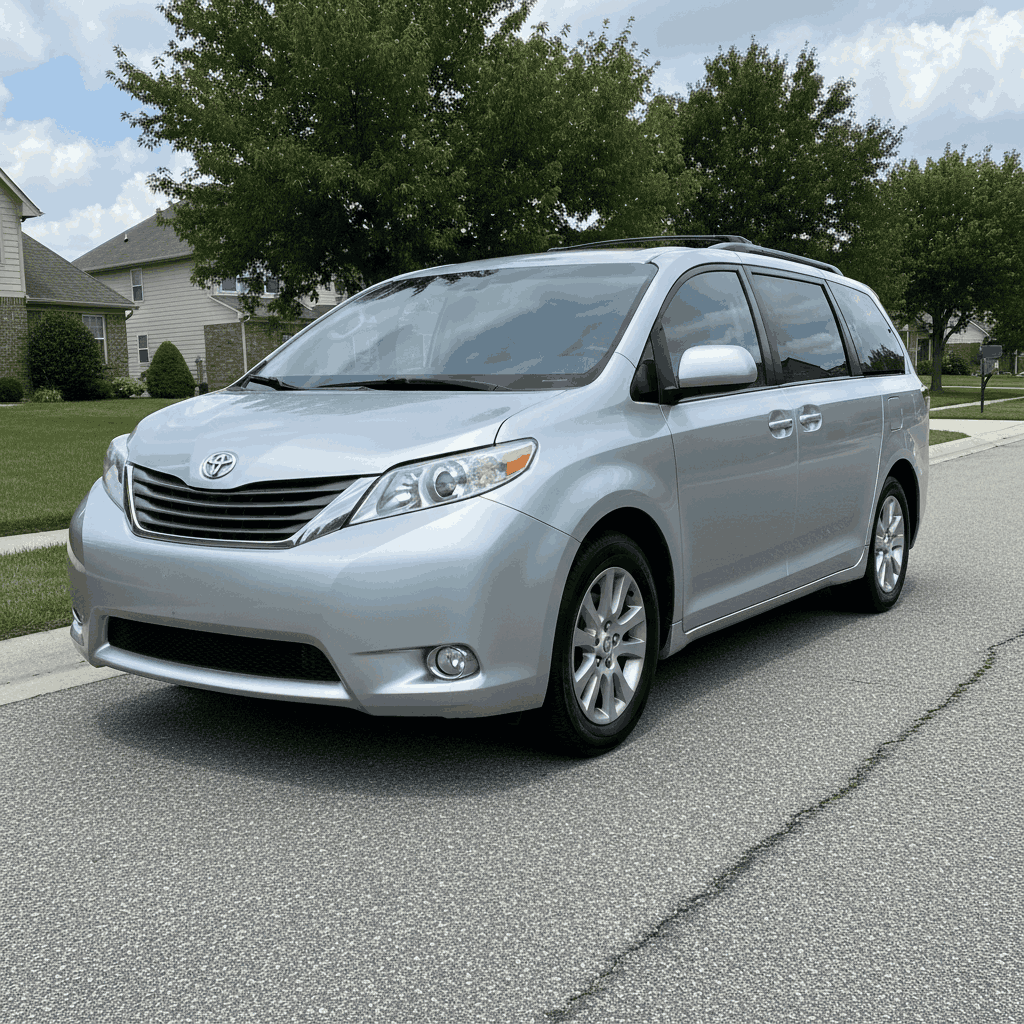
Toyota Sienna tires wearing out too quickly? You’re not alone. Many owners notice their front tires disappearing faster than expected — sometimes far sooner than the manufacturer’s mileage estimate.
If your Toyota Sienna front tires wore out under a year, or you’re seeing uneven tire wear and noticeable outer edge wear, there are specific mechanical and design reasons behind it. At Patriot Express Auto, we’ve completed hundreds of inspections on Sienna models and consistently see patterns that explain why Toyota Sienna front tires wear out so fast.
Let’s break it down clearly.
“My Sienna is going through front tires way too fast – why?!”
We hear this often from Toyota Sienna owners, especially those driving mid-2010s models. While it’s frustrating, this usually isn’t caused by defective tires or poor maintenance. In most cases, it’s the result of how the vehicle is designed and how the Sienna has evolved over time.
Once you understand what changed with this vehicle, the tire wear pattern makes a lot more sense — and there are ways to slow it down.
How the Sienna Has Changed Over Time
The Sienna has evolved significantly across generations. Models like the 2017 Sienna XLE Premium AWD introduced added drivetrain components and safety systems that increased front-end load.
Key factors include:
- Front-heavy weight distribution
- AWD hardware increasing total mass
- Softer factory suspension tuning for ride comfort
- Higher torque transfer during acceleration
Because of this front-biased setup, many owners experience front tire one side wear, especially when minor alignment deviations go unchecked. Even small suspension wear can quickly turn into noticeable tire damage.
Toyota has steadily updated the Sienna to meet customer expectations for power, safety, traction, and comfort. Those improvements came with trade-offs, especially when it comes to tire wear.
Here’s a simplified look at how the Sienna has evolved by generation:
Toyota Sienna by Generation (Overview)
| Generation | Model Years | Typical Powertrain | AWD Available | Approx. Curb Weight |
|---|---|---|---|---|
| 1st Gen | 1998–2003 | 3.0L V6, FWD | No | ~3,850–3,950 lbs |
| 2nd Gen | 2004–2010 | 3.3L / 3.5L V6, FWD | Yes (optional) | ~4,100–4,500 lbs |
| 3rd Gen | 2011–2020 | 3.5L V6, higher output | Yes (common) | ~4,300–4,750 lbs |
| 4th Gen | 2021–Present | Hybrid system | Yes | ~4,600–4,725 lbs |
Over roughly 25 years, the Sienna gained:
- more horsepower and torque
- AWD
- significantly more safety equipment
- more sound insulation and comfort features
All of this added weight, and most of that weight sits over the front axle where the engine, transmission, and crash structure are located.
By the third generation, many Siennas weighed as much as an F-150, yet were still built on a car-based platform with suspension geometry designed primarily for comfort and predictable handling, not maximum tire longevity.
Toyota made these changes because families wanted safer highway merging, better winter traction, quieter rides, and improved safety. Faster front tire wear is one of the trade-offs.
Why the Front Tires Take the Biggest Hit
Even on vehicles with perfect alignment, front tires usually wear faster. On the Sienna, that effect is amplified for several reasons:
Weight distribution. Most of the vehicle’s mass sits on the front axle. More weight means more friction and heat at the tire, which increases tread wear.
Braking load. During braking, weight transfers forward. On a heavy vehicle, this significantly increases the load on the front tires in everyday driving.
Steering forces and sidewall flex. When turning, the tire’s sidewall flexes and the tread scrubs across the pavement. On heavier vehicles, this flex – often called sidewall squirm – is greater and tends to wear the outer edges of the front tires first.
Propulsion on FWD models. On front-wheel-drive Siennas, the front tires also handle acceleration. That means they are responsible for steering, braking, and pulling the vehicle forward at the same time.
This combination of forces is why front tire wear is so common on this platform, especially as the vehicle becomes heavier and more powerful.
Several mechanical realities explain why Toyota Sienna front tires wear out so fast:
- 60%+ weight bias toward the front
- Steering and braking handled entirely by front axle
- Soft OE-rated (SL) tires from factory
- Alignment sensitivity on multi-link suspension
Excessive Outer Wear on Front Tires
One of the most common complaints is excessive outer wear on front tires.
Here’s why it happens:
- Outer shoulder absorbs the most load during turning
- Sidewall flex (often called “sidewall squirm”) increases under heavy vehicles
- Frequent braking + cornering multiplies outer-edge stress
- Softer SL-rated tires flex more, wearing the outer edges first
Once outer shoulder wear begins, it accelerates rapidly.
Tire Rotation Is Not Optional on This Platform
Because the front tires carry more load and perform more work, they will always wear faster than the rear tires. The only way to prevent the fronts from being destroyed early is regular rotation.
We strongly recommend rotating Sienna tires every 5,000–6,000 miles, which conveniently lines up with most oil change intervals.
Waiting until 10,000 miles or longer often means:
- the front tires are already significantly worn
- the wear pattern is already established
- and rotation will not fully even it back out
At that point, the front tires are often too far gone to save.
Frequent rotation:
- spreads the heavy front load across all four tires
- keeps wear patterns more even
- and can add thousands of miles of usable life to a set of tires
This is especially important for AWD models, where all four tires need to stay close in diameter to avoid drivetrain stress.
Rotation does not fix the design realities of the vehicle, but it is one of the most effective ways to manage them.
On many vehicles, skipping a rotation once isn’t catastrophic. On the Sienna, it can shorten tire life dramatically.
Front tires must be rotated every 5,000–6,000 miles.
If your Toyota Sienna front tires wore out under a year, delayed rotation is often part of the reason. Once uneven tire wear patterns are established, they rarely correct themselves.
Tire Pressure: Only After Upgrading to XL-Rated Tires
Tire pressure is one of the best tools for reducing sidewall flex and edge wear, but only if the tire itself is built to handle higher pressure.
Most Toyota Siennas, especially in the common 235/60R17 tire size, are installed with SL (Standard Load) rated tires. These tires typically have a maximum pressure rating of 36 PSI.
On an SL-rated tire, increasing pressure beyond that is not appropriate and does not solve the underlying sidewall flex problem.
To safely run higher pressure and improve stability, the tire must be upgraded to an XL (Extra Load) rated tire, which typically has:
- a maximum pressure rating around 42 PSI
- a higher load index, often 106 in this size
XL-rated tires provide stiffer sidewalls, better resistance to flex under load, and more stable tread contact during turning and braking.
Once the vehicle is on properly rated XL tires, we often recommend running approximately 41 PSI in the front and 39 PSI in the rear, depending on vehicle load and driving habits.
This setup reduces sidewall squirm, improves steering stability, and significantly slows outer-edge tread wear on the front tires.
Pressure should always remain within the tire manufacturer’s specifications and be matched to the tire’s load rating, not just the vehicle placard on the door.
Many Sienna owners upgrade from SL-rated tires to XL-rated (Extra Load) tires for stronger sidewalls.
Important clarification:
- XL tires can reduce sidewall flex
- They may help minimize uneven tire wear
- They can improve certain front tyre wear issue patterns
However, increasing load rating does NOT replace proper alignment or suspension repairs. Tire pressure adjustments alone will not solve mechanical causes of wear.
(Pressure specifications should always follow manufacturer and tire brand guidelines.)
Alignment and Suspension Still Matter
Because the Sienna is heavy, even small alignment changes can accelerate tire wear.
Alignment should be checked:
- when new tires are installed
- if uneven wear begins to appear
- after major pothole impacts
In addition, worn suspension or steering components allow the wheel to move under load. Bushings, ball joints, and struts often wear before drivers notice handling problems, but they can destroy tires quickly if left unchecked.
Alignment ensures the wheels are pointed correctly.
Tire construction determines how well the tread stays flat on the road under load.
Both are important, but on this platform, tire construction is often the limiting factor.
Even with perfect rotation and tire upgrades, worn components will destroy tires.
How to Tell If It’s Wheel Bearings or Alignment?
The following issues:
- Alignment issue: Vehicle pulls left or right
- Wheel bearing issue: Humming noise that increases with speed
Many drivers reporting a Toyota Sienna tire wear & pulling issue are actually dealing with one of these two causes.
How to Tell If a Steering Ball Joint Needs Replacing?
Ball joints are a common contributor to why Toyota Sienna front tires wear out fast.
Warning signs include:
- Clunking noise over bumps
- Uneven outer tire wear
- Steering looseness
- Vibration at highway speeds
This is often the hidden answer behind searches like why Toyota Sienna front tires wear out fast ball joints.
Ignoring worn ball joints can destroy a new set of tires quickly.
Comfort vs Tire Longevity: A Real Trade-Off
Higher tire pressure and stiffer sidewalls improve tire life and handling, but they do change how the vehicle feels:
- the ride may be slightly firmer
- more road texture may be noticeable
In practical terms, you are trading a small amount of ride comfort for longer tire life, more stable handling, and improved fuel economy. Many owners find that trade-off worthwhile after replacing front tires prematurely more than once.
Toyota originally equipped many Siennas with softer passenger-rated tires to maximize ride comfort and reduce noise, which is exactly what most buyers want during test drives. The long-term consequence is faster wear when the vehicle is heavily loaded and driven daily.
Upgrading tire construction is one of the few ways to rebalance that equation in favor of longevity.
Many owners notice improved steering stability after switching to XL-rated tires, especially on AWD models. The ride may feel slightly firmer, but tire life often improves.
One Driving Habit That Also Matters
Turning the steering wheel while the vehicle is stopped or barely moving puts significant stress on the tire edges and sidewalls. On a heavy front-loaded vehicle, this accelerates outer-edge wear.
Letting the vehicle roll slightly before turning reduces that strain and helps tires last longer.
Final Thoughts
If your Sienna is wearing front tires quickly, it is worth checking alignment and suspension condition before installing another set of tires. Otherwise, the same wear pattern often returns.
This is not a flaw in the vehicle. It is the result of how the Sienna was engineered to meet safety, comfort, and traction expectations. With the right tire selection, proper rotation, and correct setup, most owners can significantly improve tire life.
Frequently Asked Questions
Why do Toyota Sienna front tires wear out so fast?
Because the Sienna is front-heavy and the front axle handles steering, braking, and most of the vehicle weight. Minor alignment or suspension issues quickly cause accelerated wear.
Can bad ball joints cause outer tire wear?
Yes. Worn ball joints change suspension geometry, leading to excessive outer wear on front tires.
How long should Sienna tires last?
With proper rotation and alignment, most quality tires should last 40,000–60,000 miles. Poor maintenance can reduce that significantly.
Is uneven tire wear covered under warranty?
Typically no. Tire warranties usually exclude wear caused by alignment or suspension problems.
How to know if it’s wheel bearings or alignment?
Alignment issues cause pulling left or right. Wheel bearings create a humming noise that increases with speed.