If you’re asking, “Why is my car overheating?” or “Why is my car running hot?”, it’s important to act quickly. A car usually overheats because the cooling system cannot remove heat from the engine. The most common causes include low coolant, coolant leaks, a faulty thermostat, radiator problems, or a failing water pump. If your engine overheats, stop driving safely, allow it to cool, and have the cooling system inspected to prevent serious engine damage. In this guide, we’ll explain the most common reasons for car overheating, warning signs, and practical solutions to help you routine vehicle maintenance and identify the problem before it turns into an expensive repair.
Signs Your Car Is Overheating
Recognizing the early signs of engine overheating can help you avoid expensive repairs and keep your vehicle running safely. If you’ve been wondering, “Why is my car running hot?”, paying attention to these warning signs can help you identify the problem before it leads to serious engine damage.
1. Temperature Gauge Rising Into the Red: One of the first indicators of an overheating car is the temperature gauge climbing toward the red or “H” zone. This means your engine is operating above its normal temperature and should be inspected as soon as possible.
2. Engine Coolant Over Temperature Warning Light: Many modern vehicles display an engine coolant over temperature warning light or a “Hot Engine” message when the cooling system can’t regulate engine temperature. Never ignore this warning, as it signals that your engine is overheating.
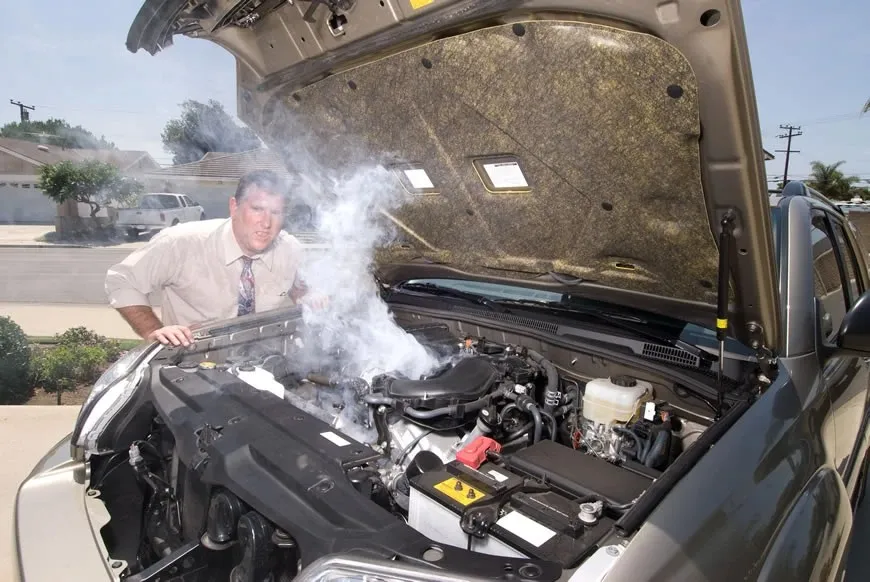
3. Steam Coming From Under the Hood: If you notice steam escaping from under the hood, your engine may be overheating due to boiling coolant or a coolant leak. Pull over safely, turn off the engine, and allow it to cool before checking under the hood.
4. Sweet or Burning Smell: A sweet smell often indicates leaking coolant, while a burning odor may suggest overheated engine components, belts, or hoses. Both are warning signs that your cooling system needs immediate attention.
5. Loss of Engine Performance: An overheating engine may lose power, hesitate during acceleration, or enter a reduced-performance mode to help protect critical engine components from further damage.
6. Knocking or Ticking Noises: Excessive engine heat can reduce the effectiveness of engine oil, causing internal components to produce knocking or ticking sounds. These noises should never be ignored, as they may indicate developing engine damage.
7. Heater Blowing Cold Air: If your heater suddenly starts blowing cool air instead of warm air, it could mean coolant isn’t circulating properly through the engine, often due to low coolant levels or a cooling system malfunction.
8. Dashboard Warning Lights: Modern vehicles often display a dashboard warning light when the engine temperature becomes too high. You may see an engine coolant over temperature warning, a red temperature icon, or a “Hot Engine” message. These alerts indicate that your engine is overheating and should never be ignored. If a warning light appears, reduce your speed, pull over when it’s safe, and allow the engine to cool before continuing your journey.
Ignoring these warning signs can turn a minor cooling system issue into a major engine repair. If you notice any of these symptoms, stop driving when it’s safe to do so and have your vehicle inspected to prevent further damage.
What to Do If Your Car Is Overheating
If you’re wondering what to do if your car is overheating, acting quickly and safely can help prevent costly engine damage. Follow these steps if you notice signs of engine overheating or an engine coolant over temperature warning.
1. Turn Off the A/C and Turn On the Heater
Switch off the air conditioner immediately to reduce the load on the engine. Then, turn the heater to its highest setting. Although it may make the cabin uncomfortable, it helps pull excess heat away from the engine and can temporarily reduce the temperature of an overheating car.
2. Pull Over to a Safe Location
If the temperature gauge continues to rise or you notice steam coming from under the hood, find a safe place to pull over as soon as possible. Continuing to drive with engine overheating can lead to severe engine damage and expensive repairs.
3. Shut Off the Engine and Let It Cool
Once you’ve stopped safely, shift the vehicle into Park or Neutral, turn off the engine, and carefully open the hood to help heat escape. Stay clear of any steam and allow the engine to cool completely before inspecting anything under the hood.
4. Never Remove the Radiator Cap While the Engine Is Hot
Do not remove the radiator cap immediately after the engine overheats. The cooling system is under pressure, and hot coolant can spray out, causing serious burns. Wait until the engine has cooled completely before opening the radiator or coolant reservoir.
5. Check the Coolant Level
After the engine has cooled, inspect the coolant reservoir. If the coolant level is low and there are no visible leaks, carefully add the recommended coolant according to your vehicle’s owner’s manual. If the coolant is leaking or the reservoir is empty again after refilling, your vehicle should be inspected by a professional.
6. Restart the Vehicle Carefully
Restart the engine only after it has cooled and monitor the temperature gauge closely. If the engine coolant over temperature warning returns or the temperature rises again, turn the engine off immediately and avoid driving any farther.
7. Visit a Professional Repair Shop
Even if your vehicle appears to return to normal, repeated engine overheating often points to an underlying issue such as low coolant, a faulty thermostat, a failing water pump, or a damaged radiator. Scheduling an inspection as soon as possible can help identify the cause and prevent more expensive repairs.
Common Causes of Car Overheating
There are many car overheating reasons, and identifying the root problem is the first step toward preventing serious engine damage. While some issues can be resolved with routine maintenance, others require immediate overheating car repair. Below are the most common causes of car overheating and how they affect your vehicle’s cooling system.
1. Coolant Leak
A coolant leak is one of the most common reasons for overheating of car engines. If coolant escapes through a damaged hose, radiator, water pump, or gasket, your engine won’t have enough coolant to regulate its temperature. Your mechanic will need to locate the source of the leak and repair it before refilling the cooling system.
2. Low Coolant Levels
Low coolant levels are a serious issue because they can allow air pockets to form inside the cooling system, preventing coolant from circulating properly. Maintaining the correct coolant level is an essential part of routine vehicle maintenance and helps reduce the risk of engine overheating.
3. Blocked or Damaged Radiator Hose
Cooling system hoses can become blocked, cracked, loose, or detached over time. If you frequently notice low coolant levels or visible coolant leaks, a damaged hose may be the cause. A professional inspection can identify worn hoses before they lead to more extensive cooling system damage.
4. Broken Water Pump
The water pump plays a critical role in circulating coolant throughout the engine. If the pump fails or becomes damaged, coolant can no longer flow efficiently, causing the engine temperature to rise rapidly. A failing water pump often requires immediate attention to avoid severe engine damage.
5. Clogged or Damaged Radiator
Over time, coolant can become contaminated with rust, corrosion, or debris, reducing the radiator’s ability to circulate coolant efficiently. A clogged radiator restricts coolant flow, making it difficult to keep the engine at a safe operating temperature. Routine cooling system repair and coolant flushes can help prevent this issue.
6. Stuck Thermostat
The thermostat regulates coolant flow between the engine and radiator. If it becomes stuck in the closed position, hot coolant cannot circulate properly, causing the engine to overheat. Replacing a faulty thermostat is one of the most common solutions for recurring engine overheating.
7. Cooling Fan Failure
Your radiator fan helps cool the coolant when the vehicle is idling or moving at low speeds. If the cooling fan or its electrical components fail, heat cannot dissipate effectively, increasing the risk of engine overheating, especially in heavy traffic or during hot weather.
8. Low Engine Oil
Although coolant is the primary cooling fluid, engine oil also helps reduce heat by lubricating moving engine components. Low or old engine oil increases friction, allowing excess heat to build up and contribute to overheating.
9. Broken Serpentine Belt
The serpentine belt powers several essential engine components, including the water pump in many vehicles. If the belt becomes worn, slips, or breaks, the water pump may stop circulating coolant, leading to rapid overheating.
10. Air Trapped in the Cooling System
Air pockets can develop after coolant leaks or improper coolant replacement. These air bubbles prevent coolant from flowing smoothly through the engine, reducing cooling efficiency and increasing engine temperature.
11. Blown Head Gasket
The head gasket seals the connection between the cylinder head and the engine block while keeping coolant, oil, and combustion gases separated. When the head gasket fails, coolant and oil can mix, coolant may leak into the cylinders, and combustion gases can enter the cooling system. This is one of the most serious car overheating causes and requires immediate professional repair to prevent catastrophic engine failure.
Ignoring recurring engine overheating or repeatedly topping off coolant without diagnosing the underlying problem can result in costly repairs or even complete engine failure. If your vehicle continues to overheat, schedule a professional cooling system repair, radiator repair services, or engine diagnostic services to identify and fix the issue before it becomes more expensive.
How Can You Prevent Your Car From Overheating?
Regular maintenance is the best way to reduce the risk of engine overheating and avoid costly repairs. Many car overheating causes develop gradually, so catching small cooling system issues early can save you from unexpected breakdowns. If you’ve ever asked, “Why is my car running hot?”, these simple maintenance tips can help keep your engine running safely.
Here are a few easy ways to help prevent car overheating:
- Check Coolant Levels Regularly: Keep coolant at the recommended level and inspect for leaks.
- Inspect the Cooling System: Check the radiator, hoses, water pump, and coolant reservoir for wear, cracks, or damage.
- Replace Coolant on Schedule: Fresh coolant helps your engine maintain the proper operating temperature.
- Monitor the Temperature Gauge: If the gauge starts rising higher than normal, have your vehicle inspected promptly.
- Inspect Belts and Hoses: Replace worn, cracked, or loose components before they fail.
- Maintain Proper Engine Oil Levels: Clean engine oil reduces friction and helps control engine heat.
- Schedule Routine Vehicle Maintenance: Regular inspections can identify cooling system problems before they require major overheating car repair.
A little preventative maintenance today can help you avoid expensive repairs tomorrow. If you notice repeated overheating or cooling system issues, schedule a professional inspection to keep your vehicle running safely and reliably.
Conclusion
If you’ve been asking, “Why is my car overheating?”, the answer could range from low coolant levels to more serious cooling system or engine problems. Recognizing the warning signs early, taking the right steps when your engine overheats, and following a regular maintenance schedule can help prevent costly engine damage and extend the life of your vehicle.
If your vehicle continues to experience engine overheating or the problem returns after adding coolant, don’t ignore it. Recurring overheating often indicates an underlying issue that requires professional diagnosis. At Patriot Express Tire & Oil, our ASE certified technicians can identify the root cause and provide reliable overheating car repair to get you safely back on the road. Schedule an inspection today and let us help keep your engine running at its best.
Frequently Asked Questions
Why is my car overheating even though it has coolant?
If your car is overheating despite having enough coolant, the problem could be a faulty thermostat, clogged radiator, failing water pump, damaged cooling fan, or air trapped in the cooling system. A professional inspection can identify the root cause before it leads to serious engine damage.
What is the most common cause of a car overheating?
Low coolant levels are one of the most common causes of engine overheating. However, coolant leaks, a faulty thermostat, a damaged radiator, or a failing water pump can also prevent the cooling system from regulating engine temperature, causing your car to overheat.
Can I drive my car if the engine is overheating?
No. Driving with an overheating engine can cause severe damage, including a blown head gasket or complete engine failure. If your temperature gauge rises or you see an overheating warning, pull over safely, turn off the engine, and allow it to cool before seeking professional assistance.
Can low oil cause overheating?
Yes. Engine oil helps lubricate moving parts and reduce friction. When oil levels are low or the oil is old, excess heat can build up inside the engine, increasing the risk of overheating. Regular oil changes and routine maintenance help keep your engine running at the proper temperature.
How much does overheating car repair usually cost?
The cost of overheating car repair depends on the underlying problem. Minor repairs, such as replacing a thermostat or fixing a coolant leak, are generally less expensive, while major repairs like a blown head gasket or engine replacement can cost significantly more. An inspection is the best way to determine the required repairs.
When should I take my car to a mechanic for overheating?
You should visit a mechanic immediately if your vehicle continues overheating, the warning light stays on, coolant leaks are visible, steam comes from under the hood, or the problem returns after adding coolant. Prompt diagnosis can help prevent costly engine damage and keep your vehicle safe to drive.
How do you fix an overheating car permanently?
To fix an overheating car permanently, you need to address the root cause, not just add coolant. Whether it’s a faulty thermostat, radiator, water pump, or coolant leak, a professional diagnosis and repair will help prevent recurring engine overheating and costly damage.